
Running a successful business requires more than managing employees, attracting customers, and tracking revenue. The physical space where a company operates also plays an important role in daily productivity, operating expenses, customer experience, and long-term growth. Whether a business owns a warehouse, manages an office building, operates a retail storefront, or maintains an industrial facility, its property deserves careful consideration when planning for the future.
Commercial property expenses can be easy to overlook when financial attention is focused on payroll, marketing, inventory, and other immediate business needs. However, deferred maintenance and unexpected repairs can disrupt operations and create expenses that are difficult to accommodate. A proactive approach helps business owners identify priorities, allocate resources, and prepare their facilities for changing demands.
In this article, we will explore how commercial property affects business performance, why maintenance belongs in financial planning, and how strategic property investments can support operational efficiency, workplace safety, and long-term stability.

Understand How Your Property Supports Business Operations
Evaluate Your Space as a Business Asset
A commercial building is more than the place where employees work or customers make purchases. Its layout, condition, and infrastructure influence how effectively the business functions every day.
For example, a warehouse needs adequate space for inventory, safe movement of equipment, and reliable loading areas. A retail store benefits from accessible entrances, comfortable indoor temperatures, and lighting that helps customers navigate the space. An office needs functional work areas, dependable utilities, and facilities that support employee productivity.
Business owners should periodically evaluate whether their current property meets operational requirements. Consider how employees move through the building, whether storage areas are sufficient, and whether the existing layout supports current workflows. It is also worth identifying spaces that are underused or areas where recurring problems slow down daily activities.
These assessments can reveal opportunities to improve the facility without necessarily relocating or undertaking a major renovation. Sometimes, reorganizing storage, improving lighting, or repairing damaged surfaces can make a noticeable difference.
Connect Property Decisions to Business Goals
Property planning should reflect the direction in which the business is moving. A company preparing to expand its workforce may need additional office space, while a manufacturer expecting higher production volumes may require improved equipment access or additional storage capacity.
Consider your business goals for the next one to five years. Will you need to accommodate more customers, expand inventory, introduce new machinery, or provide additional employee facilities? Answering these questions helps determine which property improvements deserve attention now and which can be scheduled for later.
It also helps prevent spending money on upgrades that may soon become unsuitable. For instance, investing heavily in a layout that cannot accommodate anticipated growth could lead to another expensive renovation sooner than expected.
By connecting property decisions to business objectives, owners can make improvements that serve a clear purpose rather than reacting to every new need as it appears.
Make Property Maintenance Part of Your Financial Plan
Budget for Routine Maintenance and Major Repairs
Every commercial property requires ongoing attention. Roofs, floors, elevators, lighting systems, concrete surfaces, and mechanical equipment all experience wear over time. Without a maintenance budget, even predictable expenses can become difficult to manage.
Start by listing the property’s major systems and recording their condition, age, maintenance history, and expected replacement needs. Use this information to create a schedule of routine inspections and anticipated repairs. Where possible, obtain professional assessments for systems that are expensive to replace or essential to business continuity.
A commercial maintenance budget should distinguish between recurring expenses and larger capital projects. Routine expenses may include inspections, cleaning, servicing, and minor repairs. Capital projects might include replacing a roof, renovating a loading area, or upgrading building systems.
It is also wise to maintain a reserve for unexpected problems. The appropriate amount depends on the property’s age, condition, complexity, and available financial resources. Older buildings or facilities with specialized equipment may require more flexibility.
A realistic budget helps business owners compare maintenance costs against other priorities while reducing the likelihood that one unexpected repair will derail the entire financial plan.
Account for Repairs That Could Interrupt Operations
The financial impact of a property problem extends beyond the repair invoice. A malfunctioning elevator could limit access to upper floors, while a damaged loading area could slow deliveries. Heating, cooling, electrical, or plumbing problems may make parts of a building uncomfortable or unusable.
Businesses should identify which property systems are essential to their operations and consider what would happen if each became unavailable. Determine whether temporary workarounds exist, whether employees could work elsewhere, and how long the business could operate before a disruption caused significant losses.
For multistory commercial buildings, planned elevator repair services can help address mechanical issues and maintain reliable access. Owners should follow applicable inspection requirements, respond to reported problems, and work with qualified technicians familiar with the elevator system.
Planning ahead does not eliminate every disruption, but it gives business owners a clearer process for responding when something goes wrong. It can also help them prioritize repairs according to operational importance rather than addressing problems solely in the order they appear.
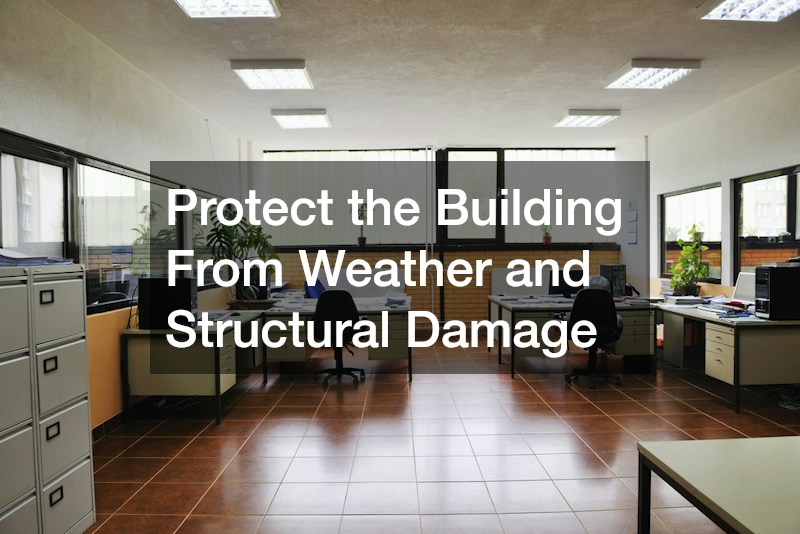
Protect the Building From Weather and Structural Damage
Keep Roofing and Drainage on the Maintenance Schedule
A building’s roof protects inventory, equipment, furnishings, employees, and customers from the elements. Roofing problems can lead to water intrusion, damaged insulation, interior deterioration, and interruptions that affect multiple departments.
Regular inspections can help identify damaged flashing, deteriorated seals, blocked drains, loose materials, and other concerns before they develop into more extensive problems. Inspections are particularly important after severe weather or when signs of leakage appear inside the building.
When repairs or replacement become necessary, a commercial roofing company can assess the roof’s condition and recommend suitable options based on the building design, materials, local climate, and maintenance requirements.
Business owners planning new construction or major renovations should also understand the materials used in the roofing assembly. For some commercial construction projects, roof metal decking supplies form part of the structural support system beneath the roof assembly. Material selection and installation should follow the project’s engineering specifications, applicable building codes, and professional recommendations.
Roofing decisions should be incorporated into long-term capital planning. Waiting until a major failure occurs may leave the business with fewer scheduling options and less time to compare solutions.
Prepare for Seasonal Conditions
Weather-related property needs vary by location. Heavy rain, high winds, freezing temperatures, and snow can affect building access, parking areas, drainage, and exterior equipment.
Businesses operating in snowy regions should determine how entrances, sidewalks, loading zones, and parking areas will remain accessible during winter weather. Depending on the property’s size and conditions, the plan may involve contracted snow removal, designated staff responsibilities, and appropriate storage for winter maintenance equipment.
For properties that require dedicated equipment, purchasing or arranging access to a snow plow may be one option to evaluate. The decision should account for purchase or rental costs, storage, maintenance, operator training, and the amount of snow the property typically receives.
Seasonal planning should also include reviewing exterior lighting, checking drainage before wet weather, protecting vulnerable pipes from freezing, and confirming that contractors can respond when needed.
The goal is to prepare the property before weather creates an urgent problem, allowing the business to maintain safer access and reduce avoidable downtime.
Invest in Durable Materials and Functional Workspaces
Choose Flooring That Matches Daily Demands
Commercial flooring needs differ considerably depending on how a building is used. A professional office may prioritize appearance and ease of cleaning, while a production facility needs surfaces that can withstand frequent traffic, equipment movement, and potential spills.
Before replacing flooring, evaluate foot traffic, cleaning routines, moisture exposure, chemical use, and the types of loads the surface must support. The most suitable material is the one that meets the facility’s functional requirements without creating unnecessary maintenance demands.
For certain concrete floors, commercial epoxy flooring may provide a durable, seamless finish that is easier to clean than some unfinished surfaces. Its suitability depends on factors such as substrate condition, moisture levels, expected chemical exposure, and the quality of surface preparation.
Businesses should obtain professional advice about installation requirements, curing time, slip resistance, and any operational restrictions during the work. Scheduling flooring upgrades during a planned shutdown or slower business period may reduce disruption.
Although lower-cost materials can be attractive initially, long-term planning should account for expected service life, cleaning needs, repair costs, and the consequences of premature failure.
Maintain Concrete and Other High-Traffic Areas
Concrete surfaces are common in warehouses, industrial facilities, parking structures, loading areas, and commercial construction projects. Their condition can influence safety, accessibility, drainage, and equipment movement.
Cracks, uneven sections, surface deterioration, and drainage problems should be assessed to determine whether they represent cosmetic concerns or more significant issues. In busy facilities, damaged surfaces may create hazards for employees, customers, delivery personnel, or vehicles.
For new construction and substantial concrete work, commercial concrete pumping services may help move concrete efficiently into areas that are difficult to reach with conventional placement methods. The appropriate equipment and setup depend on the project’s scale, site access, concrete specifications, and placement requirements.
Owners should coordinate concrete work with drainage, utility installation, loading-area design, and other construction activities. Completing related work in the right sequence can reduce the likelihood of damaging newly finished surfaces or repeating labor.

Improve Lighting, Accessibility, and Workplace Safety
Review Lighting Across the Entire Property
Lighting affects how employees perform tasks, how customers experience a space, and how safely people move through a building. Poorly illuminated stairways, parking lots, storage areas, and loading zones can make everyday activities more difficult and may contribute to accidents.
Conduct periodic checks during both daytime and nighttime operations. Look for burned-out fixtures, dark corners, inconsistent lighting, glare, and areas where shadows interfere with visibility. Outdoor inspections should include entrances, pedestrian routes, parking spaces, and delivery areas.
When a facility needs a more comprehensive upgrade, commercial lighting services can help assess fixture placement, energy efficiency, controls, and lighting levels appropriate for different tasks.
LED fixtures, occupancy sensors, and automated controls may reduce energy consumption in suitable applications. However, savings depend on existing equipment, usage patterns, installation costs, and electricity rates. Business owners should compare projected costs and benefits before committing to an upgrade.
Lighting improvements should also account for applicable workplace standards and building requirements. A well-planned system can support visibility, improve the usability of the space, and contribute to a more consistent working environment.
Make Safety Part of Everyday Property Management
Workplace safety depends on both the condition of the building and the way people use it. Clear walkways, maintained handrails, accessible exits, functioning alarms, and properly stored materials can all contribute to a safer environment.
Develop a recurring inspection checklist and assign responsibility for reviewing key areas. Employees should have a straightforward way to report hazards, damaged fixtures, leaks, and equipment problems. Reports should be documented and prioritized so concerns do not disappear into informal conversations.
Businesses should also review accessibility as their workforce, customer base, and operational needs change. Entrances, restrooms, elevators, signage, and circulation routes may require adjustments to support people with different mobility needs.
Safety planning is most effective when it is proactive. Instead of waiting for an accident or inspection finding, business owners can use routine assessments to identify concerns and schedule corrective work before the problem affects daily operations.
Align Equipment, Vehicles, and Property Capacity
Plan for the Equipment Your Business Depends On
Some businesses rely on vehicles, trailers, heavy machinery, and specialized equipment to serve customers or move products. These assets should be considered alongside the property because their needs affect storage, access, maintenance space, and operating costs.
For example, a contractor may need secure outdoor storage, adequate turning space, and convenient access to loading areas. A distribution business may require parking and staging areas that can accommodate larger vehicles without interfering with pedestrian traffic.
If the business expects to expand its fleet or transport capacity, researching trailers for sale may be part of the purchasing process. Before acquiring additional equipment, owners should confirm that the property has sufficient room, appropriate access, and any necessary permissions for storage and use.
It is also important to account for the total cost of ownership. Purchase price, insurance, maintenance, registration, storage, and financing can all influence whether an acquisition supports the company’s financial objectives.
Property capacity should be evaluated before buying additional assets, not after space becomes a daily operational problem.
Schedule Vehicle Maintenance to Reduce Downtime
Businesses that depend on commercial vehicles should plan maintenance around operational schedules. Delayed servicing can lead to unexpected breakdowns, missed deliveries, and higher repair expenses.
A reliable diesel service provider can help businesses maintain diesel-powered vehicles and equipment according to manufacturer recommendations and operating conditions. Service planning may include routine inspections, fluid changes, diagnostic checks, and repairs when required.
Tire condition also deserves attention, particularly for vehicles that carry heavy loads or travel frequently. Establish inspection procedures for tread wear, inflation, damage, and other signs of deterioration.
When replacement becomes necessary, commercial tire replacement should be planned with the vehicle’s specifications, load requirements, operating conditions, and safety needs in mind. Appropriate tire selection and maintenance can support reliable handling and help limit avoidable downtime.
Vehicle maintenance and property planning overlap in practical ways. Service areas need adequate space, safe access, suitable surfaces, and arrangements for managing equipment and materials. Including these requirements in the property plan can help keep both facilities and fleets operational.

Prepare the Property for Business Growth
Decide Whether to Improve, Expand, or Relocate
As a business grows, its property may no longer suit its needs. Inventory may exceed available storage, production equipment may require more room, or customer demand may justify a larger location.
Before deciding to expand or relocate, compare the costs and operational implications of each option. Improvements to the current building may be less disruptive than moving, but major structural limitations could make expansion impractical. A new property may provide more capacity while introducing higher rent, moving expenses, fit-out costs, and changes to customer access.
Consider the full financial picture, including construction costs, financing, utility expenses, taxes, insurance, maintenance, and any revenue disruption during the transition.
It is also worth evaluating how long the business expects to remain at the property. A major investment may be appropriate for a long-term location but less attractive if the company anticipates moving within a few years.
The best decision is not always the one that creates the most space. It is the option that supports the company’s operational needs and financial goals without creating unnecessary risk.
Establish a Long-Term Capital Improvement Plan
A capital improvement plan turns property needs into a manageable schedule. It should identify major projects, estimated costs, expected timing, operational benefits, and the consequences of postponement.
For example, the plan might schedule lighting upgrades this year, roof replacement in a later budget cycle, and improvements to a loading area when business activity is lower. These dates should remain flexible enough to account for inspection findings, unexpected damage, and changes in business performance.
Review the plan at least annually and whenever significant operational changes occur. Update cost estimates, confirm project priorities, and consider whether planned improvements still align with company goals.
A written plan can also improve communication between business owners, property managers, finance teams, and department leaders. Everyone can see which projects are planned, why they matter, and how they relate to the company’s broader objectives.
Commercial property is an important part of business performance, affecting operating costs, employee safety, customer experience, and the ability to grow. When property decisions are left outside the business plan, maintenance needs can become unexpected expenses and building limitations can interfere with otherwise promising opportunities.
By budgeting for repairs, preparing for seasonal conditions, choosing appropriate materials, maintaining equipment, and planning for future space requirements, business owners can take a more strategic approach to their facilities.
A property plan does not need to address every improvement at once. Start by identifying the building systems most critical to daily operations, estimate upcoming costs, and establishing a realistic schedule for maintenance and upgrades. With regular reviews and clear priorities, your commercial property can remain a practical, reliable asset that supports your business’s long-term goals.